The first time I heard of nanotechnology was actually while watching Avengers: Infinity War, in which Tony Stark (IronMan) has a suit made out of nanotechnology. See bel
ow for a gif of the suit.
Via Avengers: Infinity War
This sparked my interest to think about how nanotech and fashion could intersect. Nanotechnology is already being incorporated into clothes via silver nanoparticles. These particles are antimicrobial, meaning they “kill bacteria that causes bad odor” (Cave). One set back to the silver technology is that “nanosilver is released from the fabric through sweat, and that those particles can be absorbed through the skin” (Green America). Long term, this could pose potential health risks. Below is a graphic of how silver nanoparticles affect the body and its functions. 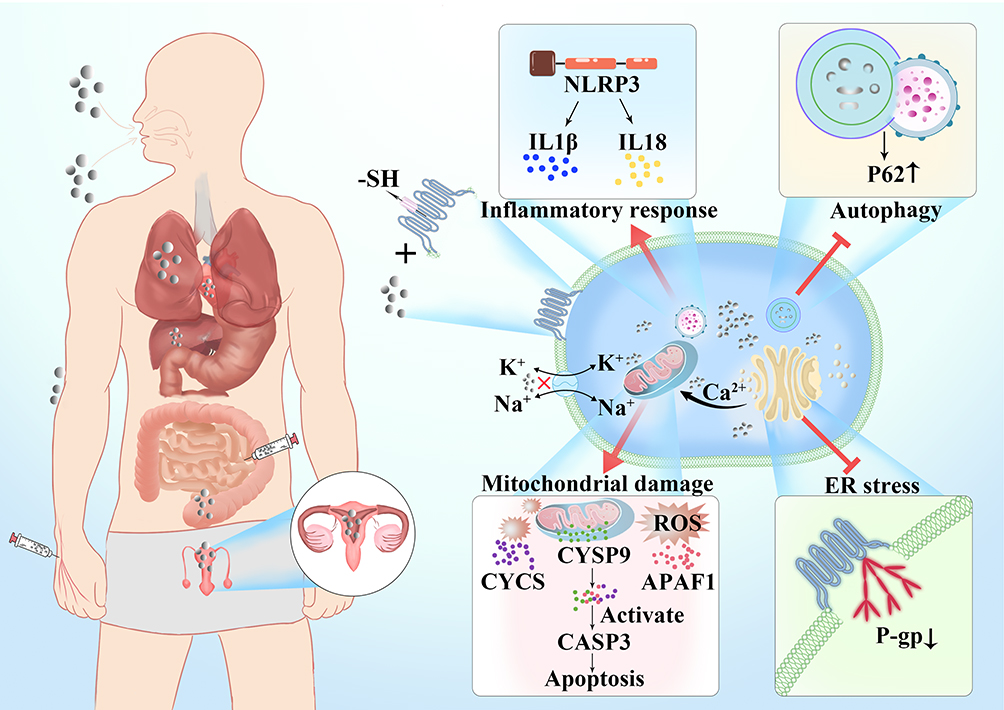 |
| Via Dove Medical Press |
However, there are still other nanotechnologies that are hopeful. Nano-whiskers, another form of nanotechnological fabric, can “produces a lightweight water- and stain-repellent material” (Paramsothy). This has the potential to create light weight repellent garments. In reducing staining through this material, there is a window for sustainability. If people’s clothes are more resistant to staining, they may be more resistant to buying new clothing more often. UV resistance is also a possibility with nanotechnology, which helps to protect against and reduce health complications such as skin cancer (Green America).
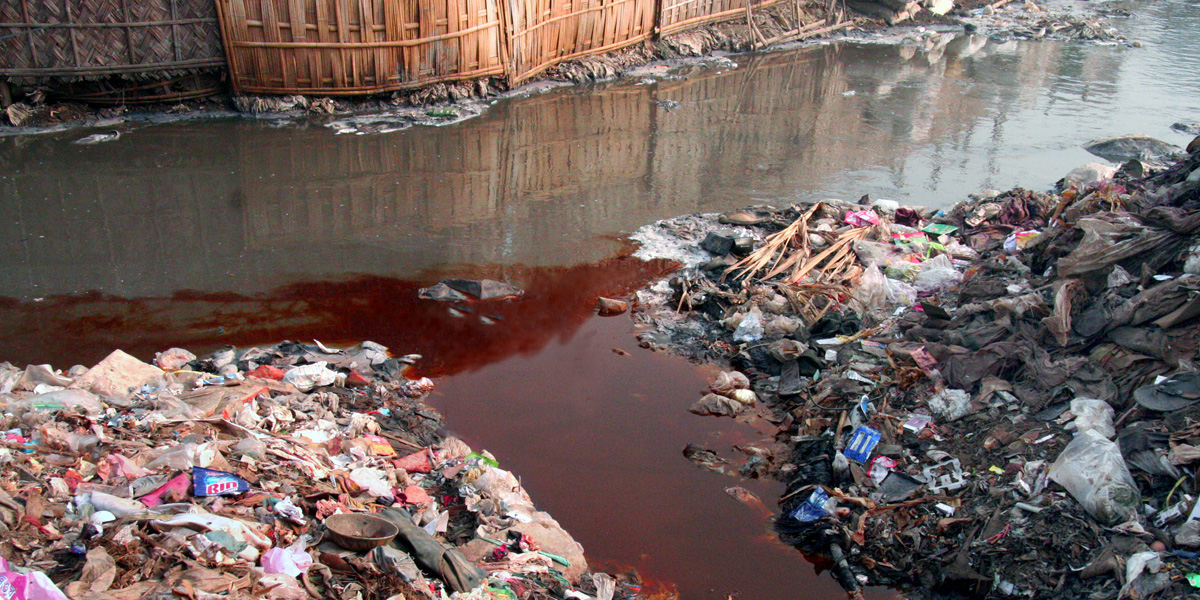
Overall, nanotechnology thus far is not comparable to the nanotechnology used in IronMan’s suit. However, with innovation it may still be possible in the future. If such progressions in nanotechnology happen, “fabrics” of such composition would be able to be reshaped and reused. The creation of clothing produces substantial waste and depletes natural resources (Center for Biological Diversity). See below for a depiction of water pollution as a result of the fashion industry.
 |
| Via EcoWatch |
Thus, technology like that used in Avengers: Infinity War would be more environmentally friendly, reducing the need to utilize more resources to create new fabrics to meet ever-changing trends.
Works Cited
“At What Cost? Unraveling the Harms of the Fast Fashion Industry.” Center for Biological Diversity, www.biologicaldiversity.org/programs/population_and_sustainability/sustainability/fast_fashion#:~:text=This%20quick%20output%20of%20garments,air%2C%20water%20and%20wildlife%20habitat. Accessed 24 May 2024.
Cave, Holly. “The Nanotechnology in Your Clothes.” The Guardian, Guardian News and Media, 14 Feb. 2014, www.theguardian.com/science/small-world/2014/feb/14/nanotechnology-clothes-nanoparticles#:~:text=Silver%20nanoparticles%20are%20added%20to,garment%20stays%20soft%20and%20wearable.
Fortiz, Izzy. “Nano-Textiles: The Fabric of the Future.” Sustainable Nano, 28 Nov. 2018, sustainable-nano.com/2018/11/28/nano-textiles/.
Paramsothy, Muralidharan. “Nanotechnology in Clothing and Fabrics.” Nanomaterials (Basel, Switzerland) vol. 12,1 67. 28 Dec. 2021, doi:10.3390/nano12010067
“The Trouble with Nanoparticles in Clothing.” Green America, www.greenamerica.org/detox-your-closet-search-less-toxic-clothes/trouble-nano-fabrics. Accessed 24 May 2024.


Hi Bailey,
ReplyDeleteYour blog post was so so interesting! I have never thought of nanotechnology in the realm of fashion. It seems that due to how small nanotechnology devices are they could essentially be everywhere in a matter of time. I think this is also why the point you brought up about sustainability is so important. I think a main reason for this is because the devices are so small they would go unnoticed by regular sustainability measures